Why Britain Needs This Now
Two gaps have opened up: nobody is watching the low sky, and nobody but the Army is holding the civil-emergency line. Sentinel closes both.
The United Kingdom faces an increasingly complex risk environment: state-sponsored hybrid activity, a flood of cheap drones, more frequent and severe extreme weather, and the enduring possibility of high-impact events that overwhelm technical systems and communications. Two gaps have opened up, and Project Sentinel is built to close them.
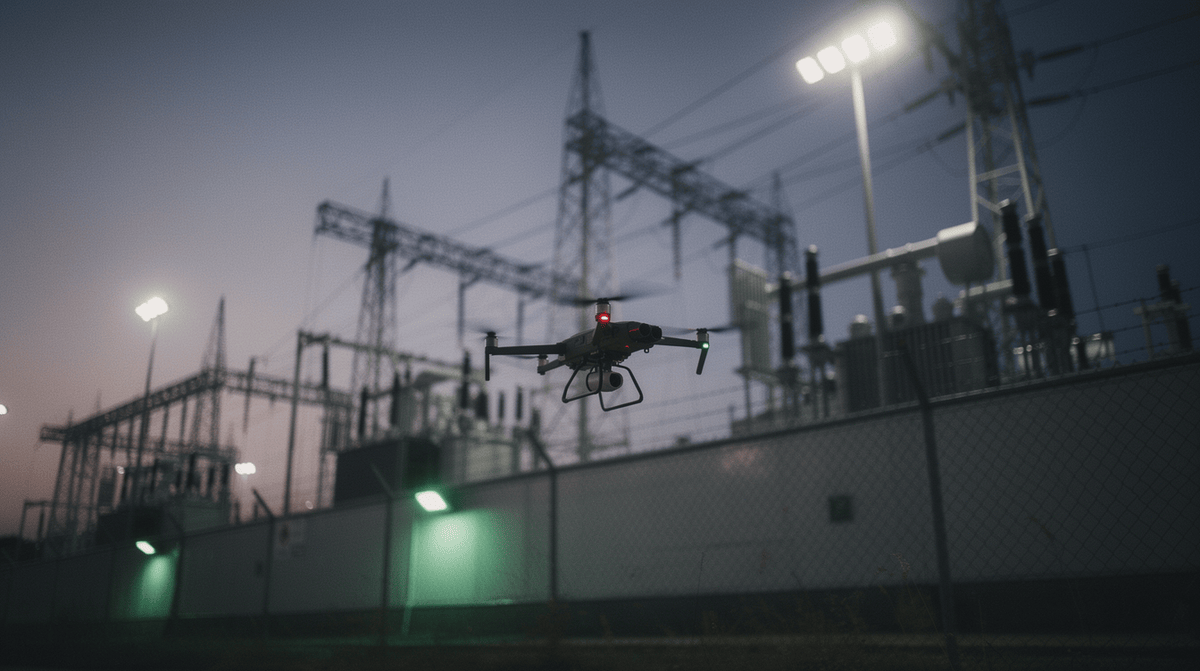
The changing threat landscape
The risk picture is broad and getting broader: hostile states probing below the threshold of open conflict, small drones in their thousands, weather that breaks records most years, and the standing chance of an event large enough to swamp the systems we rely on. The 2022 UK Resilience Framework and the Integrated Review Refresh both call out the need for better ground-truth information and community-level resilience.
Project Sentinel is not a replacement for sensors, aircraft, police, fire, ambulance or local authority teams. It is a supporting layer: trained people in known places, reporting through known channels, ready to help when normal capacity is stretched.
The low-altitude gap
Britain’s air defence is optimised for high-altitude, high-speed threats. Low-cost, low-signature drones and loitering munitions, including cardboard platforms with almost no radar signature and carbon-fibre systems available for well under £450, exploit a persistent gap in low-altitude observation “from the wire”. Internal Air Secretariat and RAF Regiment assessments confirm that existing capabilities cannot fully cover the surrounding terrain that threats fly in from.
The gap is easy to picture. A drone does not have to behave like an aircraft. It can be cheap, small, low, slow, local and hard to classify, and it is often seen first by a person at ground level, not by a national system. A trained observer network turns those sightings into usable reports.
The civil-contingency gap
At the same time, Britain’s primary civil-contingency backstop remains the Army. That creates a resilience gap the moment military resources are committed elsewhere, exactly when a domestic emergency is most likely to coincide with international pressure.
Project Sentinel offers a low-risk, high-value way to restore a nationally distributed volunteer observation and resilience capability, modelled directly on the ROC and UKWMO that served Britain so effectively before.
Why a volunteer model is still the right one
Volunteers are already rooted in the places they serve. They know the roads, hills, estates, flood points, industrial sites, ports, prisons, airfields and community halls. With training and tasking, that local knowledge becomes a national asset, and a distributed force gives surge capacity that no standing unit could afford to hold in reserve.
This is a modernised, dual-use design for today’s threat picture and today’s civil-contingency structures, not a re-enactment of the past.
The lesson from Ukraine
Ukrainian human-sensor networks and low-cost drone tactics have repeatedly shown the value of persistent, ground-level observation in a contested environment. People who know their ground, reporting what they see, have proven to be one of the cheapest and most resilient sensors a nation can field.
The Ask
Don’t wait for the next crisis to wish we had this.
Project Sentinel needs no new department, no new headquarters, no blank cheque. It needs a minister to say yes to a pilot. Add your name, send it to someone who can move it forward, and help force the decision while there is still time.