The Decision Case
The single-page argument for a minister: the problem, the solution, the cost, and the decision. Reactivate the Royal Observer Corps as a modern human-sensor layer.
Reactivation of the Royal Observer Corps as a modern mobile human-sensor layer and dual-use civil and military resilience capability. This is the case as it would be put to a minister, the problem, the answer, the cost, and the decision.
The issue
Britain’s air defence is optimised for high-altitude, high-speed threats. Low-cost, low-signature drones and loitering munitions, including cardboard platforms with no effective radar signature and carbon-fibre systems available for well under £450, exploit a persistent low-altitude observation gap “from the wire”. Internal Air Secretariat and RAF Regiment assessments confirm existing capabilities cannot comprehensively cover the terrain those threats originate from.
At the same time, the UK’s primary civil-contingency backstop remains the Army, creating a resilience gap whenever military resources are committed elsewhere. The conclusion is clear: Britain needs a layer that is cheaper, wider and more locally present than its high-end military systems. Project Sentinel is designed to be that layer.
The proposed solution
Reactivate the ROC as a complementary mobile human-sensor layer under RAF command, deliberately dual-use, providing both military counter-drone support and immediate civil-contingency and national-resilience capacity. The capability is fully mobile, with zero fixed infrastructure, built around trailer-based Mobile Command Centres.
Rapid activation
Volunteers mobilised in under 60 minutes on an intelligence-led basis. Activation triggered at the first credible indicators of elevated threat, from GCHQ, Five Eyes or other sources, not after the first strike or launch. Fully mobile assets held at RAF and Reserve units.
Infrastructure
Use existing Air Cadet facilities on non-cadet nights only, with strict safeguarding in place. Six regions mirror the Air Cadet structure. Headquarters at RAF Wyton, with a sub-headquarters option at RAF Honington.
Command and personnel
Air Commodore in command. Around 30 full-time officers trained at RAF Cranwell, at approximately £5 million annually. Volunteers fully vetted and integrated with Defence Intelligence. Joint training with the RAF Regiment and counter-drone units.
Observation assets
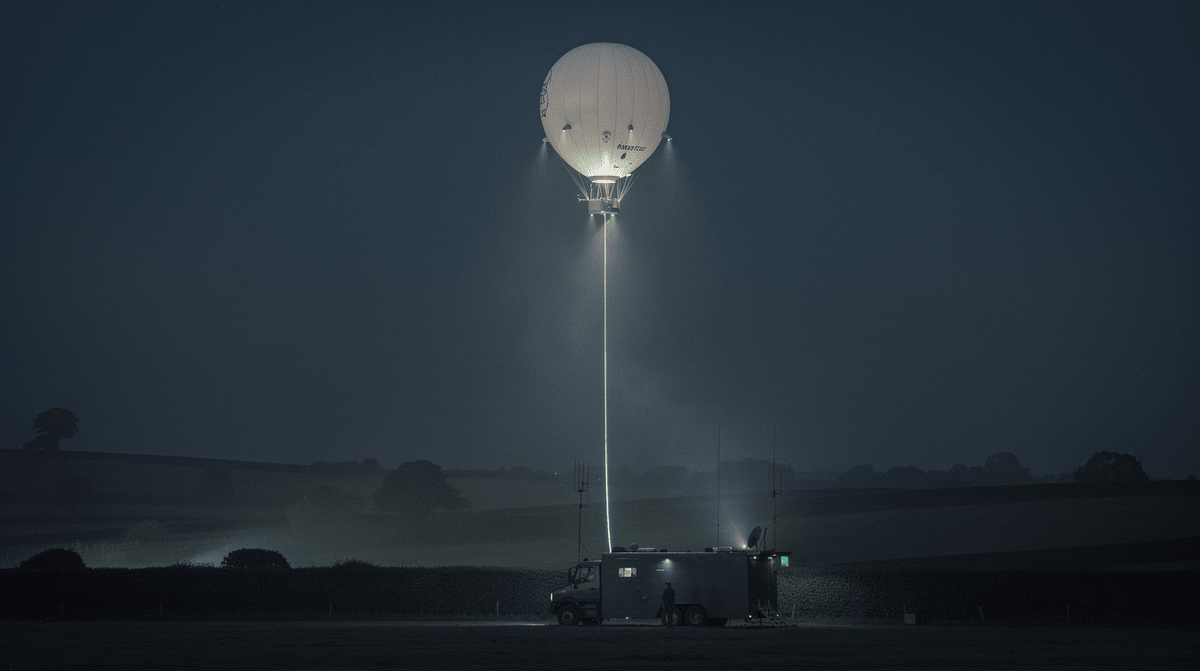
Trailer-based Mobile Command Centres with winched high-tech aerostats for long-range, top-down persistent surveillance; anomaly-investigation drones, including marauding observer pairs for real-time ground confirmation.
Strategic precedent
Ukrainian human-sensor networks and low-cost drone tactics have repeatedly demonstrated the value of persistent ground-level observation in contested environments. The model is proven under fire.
Cost-effectiveness
A low-cost alternative to constant combat air patrols or kinetic interceptors. Scalable, rapidly deployable, and requiring zero fixed infrastructure.
The impact
- Persistent ground coverage of UK airspace below radar thresholds.
- Rapid, agile mobilisation against low-altitude drone and swarm threats.
- Deterrence and resilience against decentralised, attritable drone attacks.
- Dual-use capability for civil contingencies and national resilience, flooding, extreme weather, degraded infrastructure, rest centres, triage and logistics.
The Ask
Don’t wait for the next crisis to wish we had this.
Project Sentinel needs no new department, no new headquarters, no blank cheque. It needs a minister to say yes to a pilot. Add your name, send it to someone who can move it forward, and help force the decision while there is still time.